Why Choosing the Right Wheelchair Is Important
According to the World Health Organization (WHO), the best outcomes regarding wheelchairs result from a personalized process of assessment, fitting, training, and follow-up carried out by appropriately trained professionals. There is no single wheelchair that is suitable for everyone.
A wheelchair that does not fit the user properly can hinder daily mobility and contribute to poor posture, discomfort, inefficient movement, and increased pressure on sensitive areas of the body.
Conversely, the right wheelchair can help the user maintain a stable and functional sitting position, move more efficiently, and participate in daily activities with greater independence.
A wheelchair should therefore be considered part of a comprehensive seating and mobility system, rather than simply a means of transportation.

Start with an individual assessment
The first step is to understand the person who will be using the wheelchair.
Consider questions such as:
- How often will the wheelchair be used?
- Will it be used indoors, outdoors, or both?
- Can the user maneuver the wheelchair independently?
- How much postural support is required?
- Does the user have sufficient upper-body strength and control?
- Is it possible to transfer to and from the wheelchair independently?
- Will the wheelchair need to be transported by car?
- Does the user need to navigate uneven surfaces, ramps, or long distances?
- Are there specific pressure management requirements?
The World Health Organization (WHO) recommends that the selection of a wheelchair take into account the individual’s needs, preferences, goals, and environment of the individual, rather than simply choosing a standardized model or size.
Choosing the Right Size Wheelchair
The correct dimensions are essential.
The seat width must provide enough space for the user, without being too wide. A seat that is too wide can make it difficult to maintain posture and propel the wheelchair, while one that is too narrow can cause unwanted pressure on the thighs.
Seat depth is also important. The WHO’s fitting guidelines recommend checking the distance between the front edge of the seat cushion and the back of the knees, with a gap of about two fingers (approximately 30 mm) in a standard adjustment.
Other important measurements include:
- Seat height
- Backrest height
- Footrest height
- Armrest position
- Center of gravity
- Rear and front seat height
- Cushion dimensions
These measurements should be evaluated as a comprehensive system rather than individually.

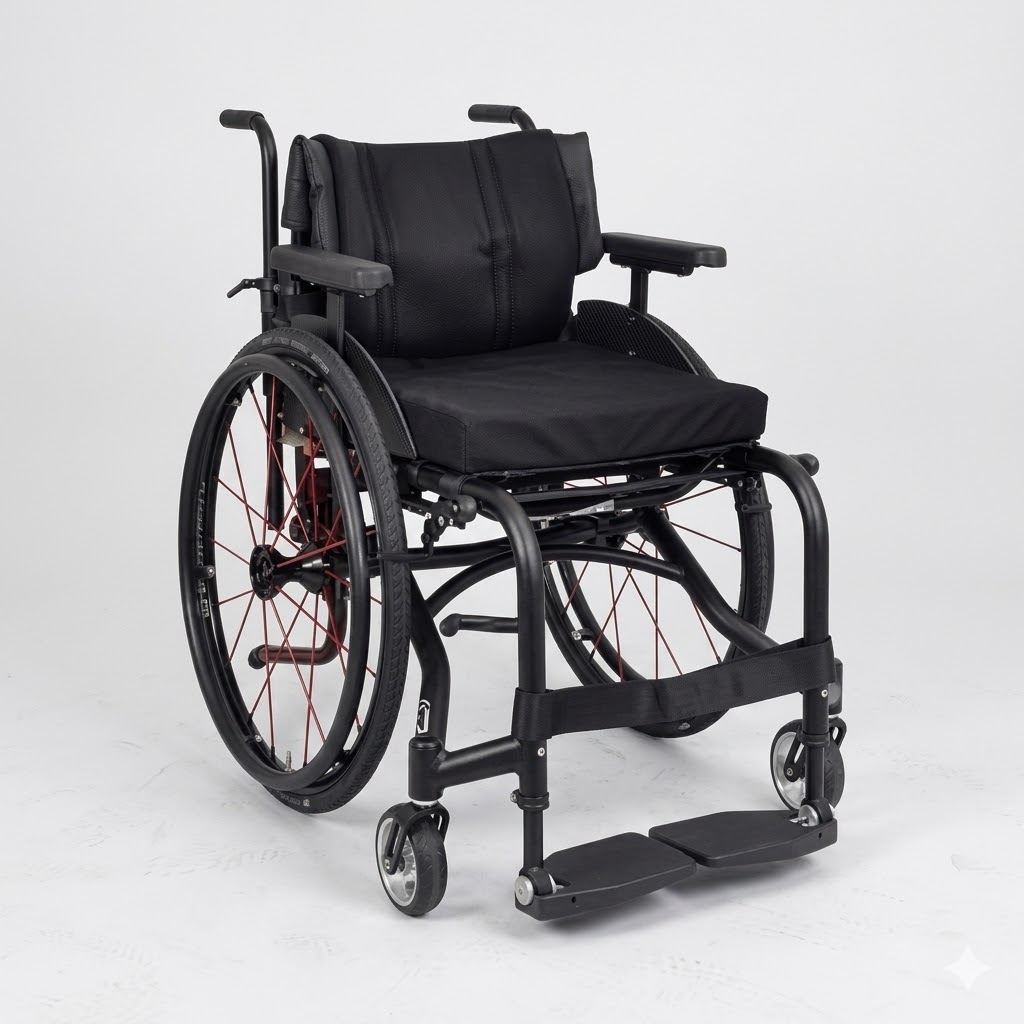
Image from Wolturnus wheelchairs
Body posture is a key element in wheelchair fitting
A wheelchair must allow the user to achieve a stable and functional sitting position.
During a seating evaluation, specialists may assess whether:
- The pelvis is correctly positioned
- The torso is upright and adequately supported
- The head is balanced
- The feet are supported
- The feet are positioned correctly
- The seatback provides adequate support
- The posture supports provide the desired level of stability
WHO guidelines specifically recommend checking body posture as part of the wheelchair fitting process.
For users who need additional support, features such as adjustable backrests, side supports, pelvic supports, headrests, tilt-in-space and recline systems.
Don’t overlook the wheelchair cushion
The cushion is an important part of the wheelchair—it is not an optional accessory.
A proper cushion can help with proper positioning, comfort, and pressure management. The appropriate cushion depends on factors such as the user’s posture, activity level, body shape, sensation, and risk of developing pressure sores.
For individuals at increased risk of pressure ulcers, the seating system must be carefully evaluated to ensure proper pressure distribution. Clinical guidelines recommend considering the entire wheelchair system, including the cushion, leg supports, and lower limb support.
Choose a wheelchair that fits your lifestyle
The best wheelchair isn’t necessarily the lightest, most expensive, or most technologically advanced model.
It’s the wheelchair that best fits the user’s real-life needs.
For an active user who travels frequently, a lightweight, rigid wheelchair may be appropriate. Someone who needs more postural support may benefit from a seating system with more adjustment options. A person who cannot propel a manual wheelchair may need an electric wheelchair.
The environment also matters. A wheelchair used primarily indoors may have very different requirements than one used outdoors for long distances and on uneven terrain.

Manual or electric wheelchair?
The choice between a manual and an electric wheelchair should be based on the user’s functional abilities and goals.
A manual wheelchair may be suitable for individuals who can propel it on their own or have a caregiver who can assist them safely. Lightweight models and models designed for active users can offer greater flexibility and efficiency to suitable users.
An electric wheelchair may be more suitable for people who cannot effectively propel a manual wheelchair or who need additional features for posture and mobility.
Electric wheelchairs can also incorporate advanced seating functions, such as electric tilt, reclining, and lifting systems, when clinically appropriate.
Make sure the wheelchair is properly adjusted
Even a high-quality wheelchair may not function properly if it has not been adjusted correctly.
After fitting, the wheelchair should be checked while stationary and again while the user is moving. The WHO fitting guidelines recommend checking the size and settings, body posture, pressure, and fit while the user is moving.
Small adjustments can make a significant difference in comfort, stability, and ease of movement.
The right wheelchair may change over time
A person’s needs may change.
Changes in strength, weight, posture, mobility, activity level, or living environment may mean that the existing wheelchair no longer provides the appropriate level of support.
For this reason, the provision of a wheelchair should not end with its delivery. Follow-up and reassessment are important components of good wheelchair provision.
Choosing the right wheelchair is about the person—not just the product
A wheelchair should never be chosen simply because it looks nice or because it is popular. The right choice depends on the individual’s body, abilities, goals, environment, and daily routine.
A professional assessment can help determine the appropriate configuration of the wheelchair, seating system, cushion, and accessories, ensuring that the final solution offers the best possible combination of mobility, posture, comfort, safety, and independence.
At Abletools, we can help users, families, and professionals explore wheelchair solutions based on individual needs and daily use. The right wheelchair is not just a chair on wheels—it is an essential tool for independence and participation.